Frequently Asked Questions

Why should we choose your company?

Unmatched customer service. Even before you choose to work with us, we are on your side. We listen. We adapt. Our goal is to see that you are delighted. That sounds like hyperbole, but it is our sincere guiding directive at every point of what we do. From advising you on the phone, to shipping, parts selection, workmanship and post-delivery service and follow up. Anytime we can assume a risk that would normally fall on our customers, we take on that risk. We are the best piano restoration firm to work with, of any size.

Is my piano worth restoring?

If you love your piano, it’s worth restoring. Any brand of piano can be restored, and if you’re committed to keeping your piano active, then it’s worth restoring whether it’s a well known brand or not.

However, maybe you’re ambivalent about keeping your current piano. In that case, start by considering what exactly you’d like to improve about the piano. For instance, do you want the cabinet refinished so that it looks new? Do you want any of the mechanical parts improved? Then consider the the maximum amount of money that you’d be willing to spend to get your piano in that condition. Armed with your work list and your budget, start contacting restoration companies asking for estimates for the work you require. If you get quotes below your budget, then it’s probably worth your while to have the piano restored.

If you’re intersted in having the piano restored in order to improve is saleability, read the next question.

What would my piano be worth after restoration?

A restored piano’s value increases by the value of the restoration you put in to it. If you invest $10,000 of restoration work, it’s worth increases by that $10,000. In this way, pianos are unlike houses, which can enjoy appreciation in value above the cost of renovations.

If you are considering restoring your piano in order to sell it, we’ll advise you to forgo that restoration and sell it as is. That way your buyer can choose the scope and details of the restoration work, and you don’t have to bear any investment costs.

Why are there so many different opinions and advice about piano restoration?

Each restorer has their own temperament, tastes, and values informing their opinions on piano restoration. The same would be true of any subject informed by accumulation of experience, from coffee to art.

We believe that our clients’ goals should direct the approach to each piano’s restoration. We start by asking you lots of questions about what you’re hoping to get, what aspects of the piano you value most, what budget you’re comfortable with. Once we have a sense of what’s important to you, then we’ll apply our expertise and recommend a course of restoration specific to your situation.

If you’re feeling overwhelmed by the amount of information out there, the best thing to do right now is just call us or send an email. We’re always on your side, and we will make it easier.

Are vintage pianos really better than the newer ones? If so, how? Are they better instruments, value, etc.?

Among high end brands, such as Steinway, vintage pianos are qualitatively different than new pianos in many of the materials and production techniques. Depending on your preferences, vintage pianos subjectively sound better. At this high level of manufacture, both vintage and new models enjoy excellent build quality. You can’t really go wrong here.

At a more economical level, it is always a better choice to buy a restored vintage brand such as Mason & Hamlin, Chickering, or Knabe than a brand new mass produced piano such as a Yamaha. Those vintage pianos were hand built. During the “vintage era” of the early 20th century, these brands competed strongly with Steinway. When restored, all of that inherent quality reappears for your enjoyment.

Restored Pianos:

  1. Have a superior tone compared to most modern pianos
  2. Have more elegant cabinets, more beautiful veneers - sometimes with intricate engravings
  3. They hold their value better
  4. NOT made with chip-board or 'MDF' board, nor do they have any plastic components
  5. Many have real Ivory-covered keyboards
  6. They were built by craftsmen using solid, seasoned wood to a high standard and thus have a life expectancy of 80-100 years before the need for restoration.

New Pianos:

  1. The majority are built in the Far East, but also in the USA, China and Russia/former Eastern bloc countries. A number of smaller manufacturers in Western Europe still build pianos.
  2. The majority are mass-produced in assembly-line style factories. In order to keep manufacturing costs down, the quality of parts used varies, kilns are used to artificially 'season' wooden parts and even soundboards can be made out of multi-laminated wood.
  3. Cabinets are usually lacking in character or refinement
  4. They lose their value quicker, compared to traditional pianos.
  5. Be wary of cheaply-priced instruments with German-sounding names. They are likely to have been built in China or the former Eastern Bloc. In our experience, they are poorly constructed and have a limited life expectancy.

Aren’t you too far to work with?

No. We work with customers all over North America. Almost all of our clients are too far away to conveniently visit our facilities. And that means hundreds of relationships conducted at this distance. Please check out our testimonials.

Who handles the shipping?

We arrange to have your piano shipped. We have close relationships with a number of specialized piano movers. Have a look at our piano moving page.

How long does the process take?

We currently take about 3 to 4 months to complete a restoration. If you need it done faster, please talk with us and we can do our best to accommodate you.

How does your lifetime trade in policy work?

When you buy a restored piano from us, you can at any time in the future exchange that piano for another one of ours and apply the full price you paid to the exchange.

Why should I buy a restored piano or have my piano restored from Lindeblad Piano Restoration?

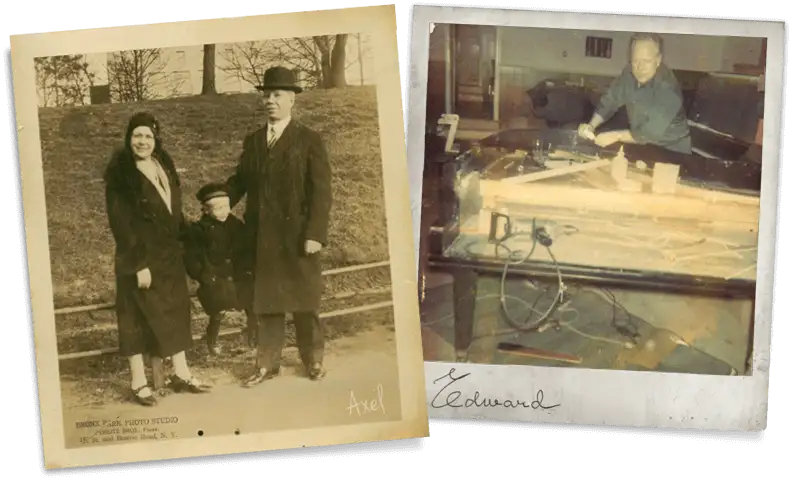
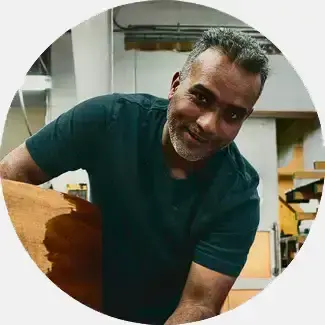
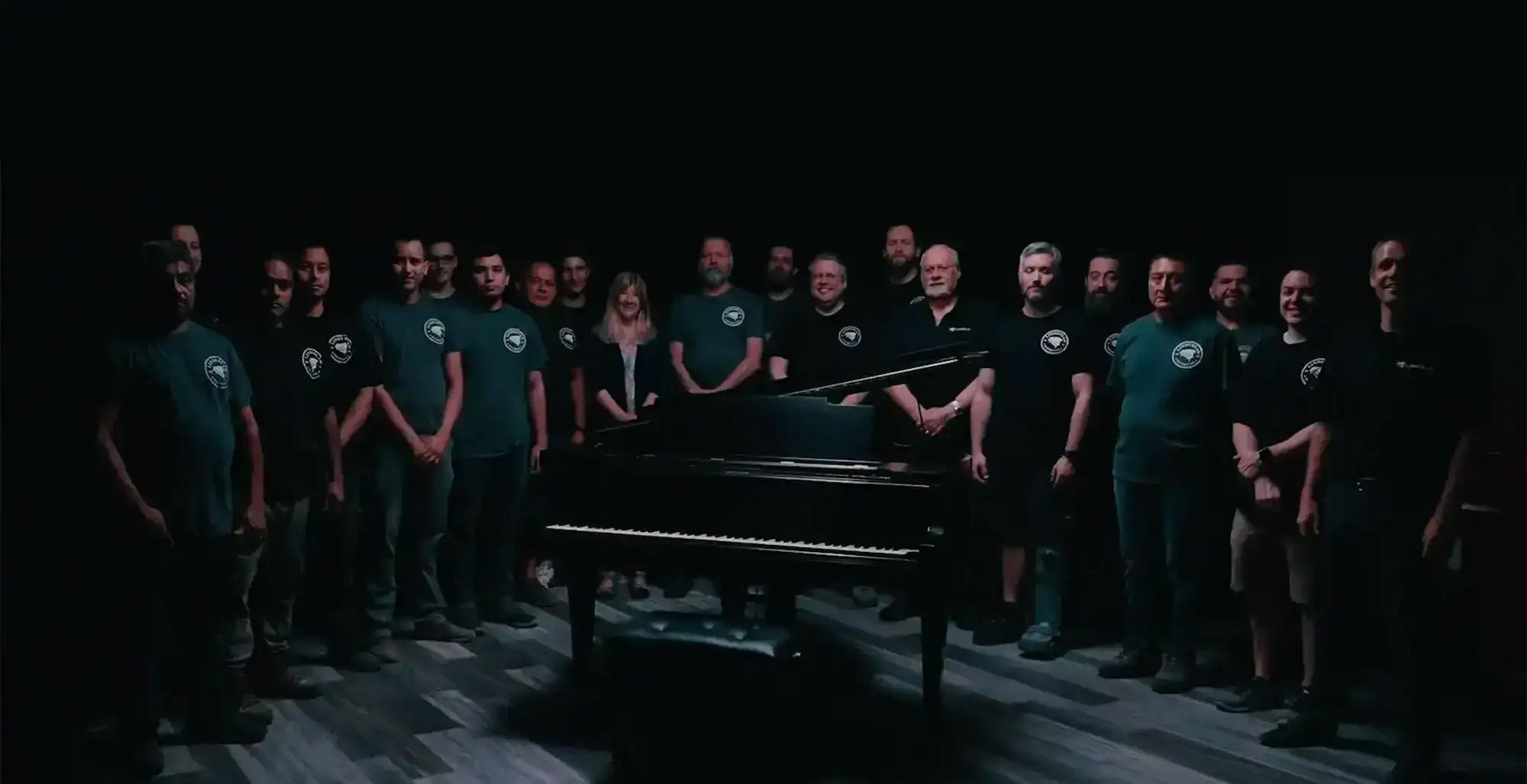
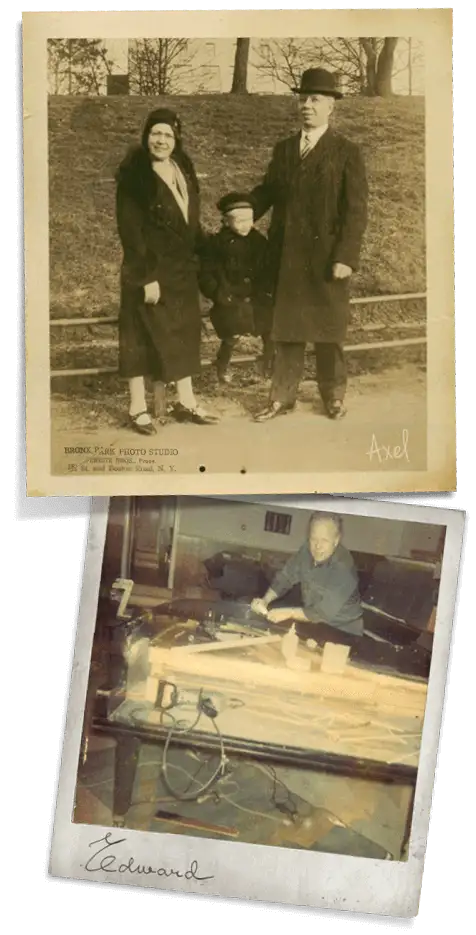
Since 1920, Lindeblad Piano Restoration has been solely specializing in restoring old world pianos. The craftsmanship of piano rebuilding and refinishing has been passed down from Axel Lindeblad to Ed Lindeblad to Paul Lindeblad and now to Sean and Todd Lindeblad. Through the family's 88 years of experience, Lindeblad Piano Restoration has become the reputable company it is today. We only use the best piano parts and materials available in the world and take pride in the restoration of each individual piano.

What parts do you use when restoring your pianos?

We use the world's finest parts which are used in the best pianos such as the New York Steinways, Hamburg Steinways, Bösendorfer, and Mason & Hamlins. We are happy to use alternatives if you request.

Do your pianos carry a warranty?

All of our pianos come with a minimum five-year warranty on all parts and labor, and many come with warranties for twenty years.

If I have my piano restored, do you supply a piano in the meantime?

Yes, if you have your piano restored by us and need a piano in the meantime, we will supply you with a piano until your piano is completed.

If I am looking for a particular piano which you currently do not have in stock, can you find it for me?

At times we may not have exactly what you are looking for in our inventory. Given these types of situations, we would be happy to search for the piano and restore it to your specifications. If you are not completely satisfied with the final product, you are not liable to buy.

How old is my piano?

To determine the year your piano was built, first locate the serial number on the piano by using our "How to Find the Serial Number" guide. Next contact us at: contact@lindebladpiano.com with your serial number and we will be able to tell you the year your piano was built.

How do I find the serial number?

Piano Top2

Visit our "How to Find the Serial Number" guide for help on easily locating the serial number on your piano.

How do I measure my piano?

Visit our guide

Where can I find more information about piano care?

Visit our piano care tips and advice.

Inquire About Moving a Piano

Pick Up Location
Delivery Location
How many steps are involved in place of pick up and in place of delivery:

Request a Restoration Estimate

We're happy to estimate the cost of restoring your piano. To get started, tell us how to get in touch with you:

Please share any remarks or questions you'd like to send along with your estimate request.

Ok

To get started, we only need the basic contact details above. But to reliably estimate your restoration, we'll eventually need to get some details about your piano. You can sumbit your request now and come back later to provide that information, or you can provide it right away.

Yes
e.g. Steinway, Mason & Hamlin.
Usually one or two letters.
The wood used in the cabinet's veneer. E.g. Walnut, Mahogany. Use "Ebony" for black.
The general style fo the cabinet and legs. E.g. Traditional, Victorian, Louis XV.
An approximate is ok. Leave empty if you have no idea.
Knowing your budget helps us prepare a relevant estimate.
The serial number is typically a 5 or 6 digit number located on the harp of the piano.
Enter length for a grand piano, height for uprights.

Sending photos of your piano can be helpful, but it's not strictly necessary. Skip these if you want.

Inquire About Selling Us a Piano

Thanks for considering us as a potential buyer for your piano.

Piano Details
e.g. Steinway
The serial number is typically a 5 or 6 digit number located on the harp of the piano.
Enter the length for a grand piano, height for an upright.

Please explain the current condition of the piano and what work you'd like to have done on it. Please explain the current condition of the piano. Also if any work has been done please specify what has been done:

Photographs are important in helping us determine the condition of your piano.

If you do not have photographs available, please submit the form anyhow we'll follow up with you.

Close-up shots of the internal parts are especially important. The more detailed photographs, the better we can assess your piano. Please upload your photos below by clicking "Browse" and select the file. Once you have selected all your files/photos, click "Submit".

Inquire About Having Us Restore a Piano

Piano Details
e.g. Steinway
The serial number is typically a 5 or 6 digit number located on the harp of the piano.
Enter length for a grand piano, height for an upright.

Please explain the current condition of the piano and what work you'd like to have done on it.

Photographs are important in helping us determine the condition of your piano.

If you do not have photographs available, please submit the form anyhow we'll follow up with you.

Close-up shots of the internal parts are especially important. The more detailed photographs, the better we can assess your piano. Please upload your photos below by clicking "Browse" and select the file. Once you have selected all your files/photos, click "Submit".