In a day of digital sound and electrical amplification, you might expect the acoustic piano to grow obsolete. But it is as popular and relevant today as ever. Consider this: when your electricity goes out and the rest of the neighborhood grows silent, you can still produce beautiful music. Just be sure that if you do, you’re up to speed on practice. Still not convinced? Then here are some other reasons for owning a piano.
Research has confirmed that children who take music lessons, especially the piano, perform better academically.1,2 Piano lessons enhance the cognitive functions that are necessary for learning. The ability to play the piano also improves self-esteem, encourages social skills and helps children overcome shyness.
The simple, yet lovely sound of a piano has an enduring quality. Rich in history, it’s a traditional instrument for teaching music appreciation from one generation to the next. It supports music as an art form that both defines and contributes to culture and deepens one’s personal awareness and sensitivity to aesthetic beauty. That appreciation may reside in the appearance of the instrument itself, which often presents an elegant beauty that enhances its surroundings.
The piano is unrivaled when it comes to establishing a strong, musical foundation. It is the only instrument that allows you to play rhythm, melody and harmony simultaneously. Piano students learn how to read both the top and bottom music staff. This equips them with greater versatility for learning how to play other instruments.
When all those weekend warriors have long since given up the cleats for the couch, you’ll still be playing, learning and improving on the piano. You can assist in music at your place of worship, help with civic groups or just “wow” the people from work when you play at the next office party.
Whatever your reason for owning a piano, we hope you find this book to be a practical guide and helpful resource. Please be sure to visit our website for more help and to contact us with any questions.
1. Schellenberg, E. Glenn (2005) Music and Cognitive Abilities. American Psychological Society, Volume 14 Number 6.
2. Hetland, L (2000) Learning to Make Music Enhances Spatial-Temporal Reasoning. Journal of Aesthetic Education, 34, 179-238.

Knabe Horizontal Grand (Style B)

Knabe Upright Grand (Style T)
Pianos are divided into two main types: grand pianos and upright or vertical pianos. Both are available in many different sizes and in a variety of styles. We’ll talk more specifically about each one later. For now, let’s review the main differences.
The most obvious difference between a grand and upright is how the soundboard and strings are positioned. The soundboard and strings on a grand piano are positioned horizontally and on the upright they are positioned vertically.
As a general rule, the longer the strings are on the piano, the fuller and the more resonant the sound that is produced. So in general, the longer the grand piano is, the better its sound. And the higher the upright piano is, the better its sound. However, you probably won’t hear a real difference in one or two inches of length. Also, keep in mind that every piano includes many components that all work together to produce a quality sound. It’s not just the strings. And there’s also the subjective difference in personal taste. The sound that appeals to you may not appeal to someone else and vice versa. If you’re the one doing the buying, be your own critic. Pick the piano that sounds good to you.
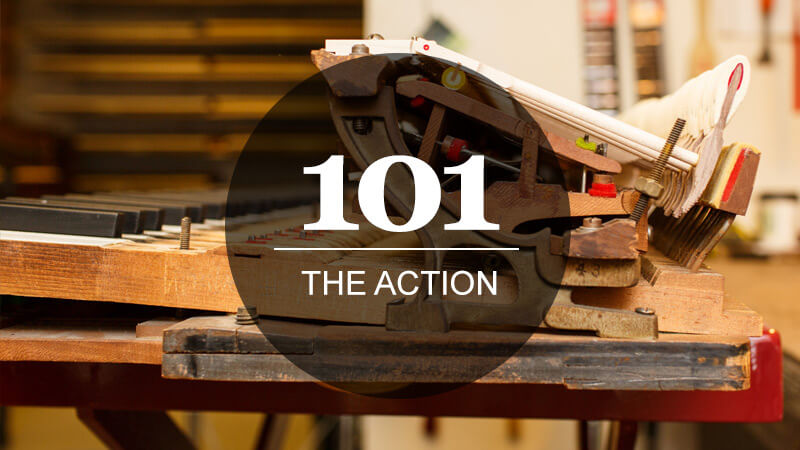
An important function in every piano is the action. it’s what gives the piano a certain “feel” when you play it. Quality pianos deliver a responsive, well-regulated action. When you press on a piano key, a hammer strikes the string and when you release the key, the hammer returns to its original position. due to its horizontal construction, the hammer on a grand piano falls back into position through gravity. But because of its vertical construction an upright piano relies on mechanisms to return the hammer to its original position.
It is generally held that the gravity driven action of the grand piano is superior to the mechanical driven action of the upright. Gravity promotes a quicker and smoother action than mechanical instruments—especially in higher priced models. but again, there is room for differences in quality construction and workmanship. And there is little chance you will ever play faster than any piano action whether it’s grand or upright. so your subjective judgment is again the key factor.
When it comes to appearance, there is little doubt that the grand piano presents a stately elegance and offers the “WOW” factor. More than just an instrument, it often makes a fashion statement and a social impression. It also promotes a sense of class and an appreciation for culture and aesthetic beauty.
But all that requires space, which may be in short supply at your house. So the compact feature of an upright piano is more practical. Besides, maybe your love is in the music. And maybe you’d rather impress others by showing off your ability to play the instrument rather than showing off the instrument itself. And uprights are not exactly an eyesore. There are many different models and styles to choose from that are very attractive and will complement your décor.
Neither type of piano holds any claim to absolute superiority. It all comes down to your subjective preference and personal need. And neither one represents a greater appreciation for the arts. That measure is individually determined within your heart.
Upright or vertical pianos are so named because their strings run in a vertical position contrary to grand pianos whose strings run in a horizontal position. The difference between the various types of verticals is based on their height measured from the floor to the top of the piano lid. The greater the height, the longer the strings. And longer strings generally produce better tonal quality although this is not a guarantee. The standard width of an upright is 5 feet and the depth between 2 and 2 ½ feet. So, to leave room for the bench, you should allow for a space of 5 foot wide by 5 foot deep.

Spinet
The spinet piano with the height of 36”–40”, is the smallest of the vertical pianos. It looks similar to the console because they are close in height. The main difference is the location of the action within the piano case. The spinet has what is called a dropped action, which means the action is below the level of the keys.
Because the action is below the keys, drop stickers or lifter wires are used to attach the keys to the action. These drop stickers make repairing the actions a challenge because technicians have to reach between the stickers to access the action part. Sometimes it even involves removing the entire action to make the repair.

Console
The console with a height of 40”–43” is the most popular of the upright pianos. The action of a console piano sits directly on top of the keys. When the hammer strikes the string and the key is released, a spring pulls the hammer back to its original position. The console’s direct hit action provides a more balanced and even feel to the keys and a quicker repetition of notes. And the console’s longer strings and larger soundboard produce a better tone, although it does not match the studio, upright or grand. Consoles are available in almost every style of furniture and with a variety of attractive designs and finishes.

Studio
Like consoles, studio pianos have direct actions, surpassed in accuracy and efficiency only by grand piano actions. Their height ranges from 44” – 48”. But the location and feel of the action is a little different and its additional height further improves the tonal quality.
Studio pianos are popular with teachers, professionals and institutions for both their sound and durability. School and church models usually feature plain cabinets, toe blocks to brace the legs, and double-wheel, heavy-duty casters. Some also include locking key covers and tops.
Decorator studios are popular for homes, offering the performance and sound of a studio piano in an attractive homelike furniture cabinet.

Upright
The tallest of the vertical pianos with a height of 49” and higher, is the upright. Its added height produces the finest sound among the verticals, a richness and tonal quality comparable to a small baby grand. In the early 1900’s it was the only vertical made and millions of them were sold. But when shorter models became popular in the 1930’s piano manufacturers stopped making uprights.
The upright piano action is located above the piano keys and rest on stickers. These stickers are made of wood and are connected to the action instead of attached to the keys like in spinets.
When carefully preserved, upright pianos are some of the most aesthetically beautiful and durable instruments ever made.
The stately elegance of grand pianos creates an attractive presence that often surpasses that of just a musical instrument. Grands possess the “WOW” factor and demonstrates a sense of culture and an appreciation for aesthetic beauty. The strings run in a horizontal fashion, using gravity in the action that many believe is superior to the vertical action of uprights.
Grand pianos come in different sizes, styles, types of wood, colors and finishes. Vintage models often feature beautifully curved legs, intricately carved wood casings, ornate music racks and real ivory keys. There’s something that appeals to every particular taste.
| Petit Grand | 4'5" to 4'10" |
| Baby Grand | 4'11" to 5'6" |
| Parlor Grand | 5'7" to 6'4" |
| Semi Concert | 6'5" to 7'5" |
| Concert Grand | 9' |
Because longer strings produce a superior tone, in general, the longer the grand piano, the better the sound. It also usually means a higher price. Of course, there’s also the matter of space. A nine foot concert grand in your home will certainly impress guests, but not be practical if it takes up the whole living room. So consider both the size and the sound when making a selection. Grand pianos are categorized by five general class sizes.
Do you like the modern look? Are you more into old school? Or maybe something completely unique and even older than old school? From vintage to contemporary, the selection is considerable. Pianos not only age gracefully, they can be completely restored to their original luster. Somewhere out there is the one that’s just right for you.
This is probably not an exhaustive list, but grand pianos can be generally classified into the following styles:
![]() |
![]() |
![]() |
![]() |
| Louis XVI | Queen Anne | Traditional | Victorian |
There’s also every color you can imagine like white, black, various shades of brown and cherry. And if you have your piano custom restored, you can match just about any color you want to complement your home décor.
The beautiful tunes you enjoy involve thousands of components individually performing at the highest level of quality and yet, in synchronized precision. It’s a matter of art and science working hand in hand.
When you press on a key, it initiates a teeter-totter like motion. Pressing down on your end raises the back end that, in turn, pushes up a mechanism composed of the wippen, the jack and the repetition lever.
Together, the repetition lever and jack push on the knuckle that is attached to the hammer shank, moving the hammer up towards the string. In the process, the back end of the key also contacts the damper underlever, pushing up to release the damper so the string can vibrate.
Before the hammer hits the string, the toe of the jack presses the letoff button. This makes the top of the jack pivot from under the knuckle while the repetition lever stops it from rising anymore.
As the jack and repetition lever disengage, the hammer continues on its own, strikes the string and bounces back. As it does, the hammer knuckle lands on the repetition lever, which pivots and compresses the repetition spring. Then the backcheck catches the tail of the hammer and stops the compressed repetition spring from pushing the hammer away.
When you slightly let up on the key, the backcheck releases the hammer tail enough so the compressed repetition spring can push the hammer towards the string again. The drop screw limits the movement so it doesn’t actually strike the string, but gives it enough room to pivot back so it’s positioned for another stroke, even though the key has not returned to where it started.
When you completely release the key, everything falls back to its original position.
Buying a new piano can be compared to buying a new car. There are many different makes, models, styles and sizes to choose from among different manufacturers around the world. And like the automotive industry, a pricing mystery shrouds the purchase of new pianos. Those prices cover a broad spectrum—from a few thousand to well over a hundred thousand. So picking out the right one for you can be... a challenge.
The good news is that in most cases, the price of a new piano is negotiable. Dealers generally aim for around a 40% profit and will commonly mark up 50% to allow for negotiation. The bad news is that finding out the actual wholesale price is nearly impossible so you never know how much a certain instrument has actually been marked up. You may well discover two different dealers from the same area offering the exact same model of piano at significantly different prices.
That’s because every dealer has his own particular costs to consider. There is rent and utilities, employee salaries, maintenance expenses for tuning showroom instruments, loan interest charges on purchased inventory and advertising costs. So how should you proceed?
Talk to knowledgeable people, check out websites and visit stores in your area. Get familiar with what’s available and learn who the reputable dealers are. If you’re a meticulous researcher, The Piano Book by Larry Fine is an authoritative resource full of helpful information. Feel free to contact us as well at contact@lindebladpiano.com or 888-587-4266. We’ll be glad to offer suggestions based on our professional experience.
Just avoid buying on impulse or because a sales person has a special sale that is about to end. There’s always another deal to be made. Take your time and make the one you feel good about. As you’re learning about pianos, ask yourself...
No, this is not a rhetorical question expressing a sense of futility, but rather a practical question of utility. What are the considerations behind your decision to buy a piano?
Answering these questions will help you narrow down the list. Because there are pianos that fit into each of these categories and they all impact the final decision and ultimate value of what you buy.
The piano’s wood cabinetry is meant to look attractive and help sell the instrument. The color, the design and the finish all create a certain appeal. And they are important considerations. Additional design and styling features will further increase the price. But there is much more for you to consider. Because the sound is produced from inside. So just like with a car, be sure to look under the hood.
Different pianos are built with different types of wood. Some types are stronger and more durable than others. Some are more resonant and produce a better tone. In general, higher quality pianos use better wood and other higher quality parts. They also lean more toward individual assembly and craftsmanship over factory automation.
For example, Steinway pianos are all individually hand made with the finest quality products, the most time tested methods and by the most experienced technicians. They are made to look, play and sound beautifully, and they are made to last. Their prices reflect it.
Most wood used today is a plywood—not the kind you think about used in home construction—but several pieces glued together to add strength, resiliency and durability. Less expensive models increasingly use pressboard (essentially sawdust pressed together) in various places to reduce costs.
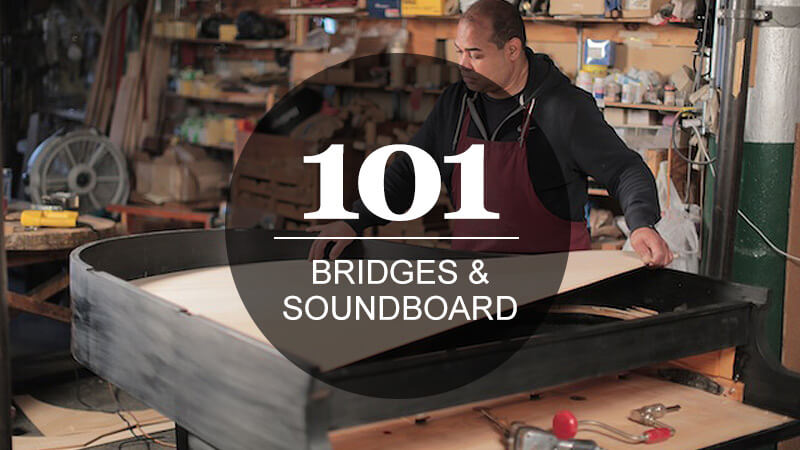
The most common woods used in quality construction include spruce, beech and maple. Mahogany and poplar are considered less desirable. And the main sound producing component you should ask about is the soundboard. If you want to appear especially informed, you might also ask about the bridge, the pinblock and the action parts. They are all important to proper functioning.
In the final analysis, you are the best judge of what you like. So let your personal preferences guide the decision. Do you like how the piano looks? Do you like the feel of the keys when you play it? Do you like the sound? Every piano is a little different. Some produce a crisp, bright tone. Others are soft and mellow. Each appeals to particular tastes.
It’s all subjective. So the best course of action is to decide what works best for your circumstances, find the instrument that meets the criteria and negotiate a price you and the dealer both consider fair.
As you go up in price, you can generally expect a longer grand piano and a higher upright piano. They are more carefully constructed with higher quality parts by more experienced craftsman, produce a fuller, richer tone and last longer. That’s not to say a less expensive factory model won’t last or doesn’t sound good. Nor does it mean you can’t find some really good buys. You can. The more you know and the more carefully you shop, the better your chances at find the one that is just right for you. Good luck in your search.
Buying a used piano can be like buying a used car—there’s a lot to consider. And both require a version of checking under the hood. Although with a piano, you might find it a little tricky kicking the wheels.
Start by asking the owner questions. And locate the serial number. This will help you confirm when the piano was built.
Even when you know what you’re doing, there are still some things only a qualified piano technician can judge effectively. So feel free to print this checklist and use it when you’re looking. It assumes you know how to remove the outer case to look inside. But before you actually buy, have a qualified technician look it over too. That way you’ll know exactly what you’re getting.
The piano you buy should appeal to your own sense of taste and fashion. Everyone is different. So ask yourself:
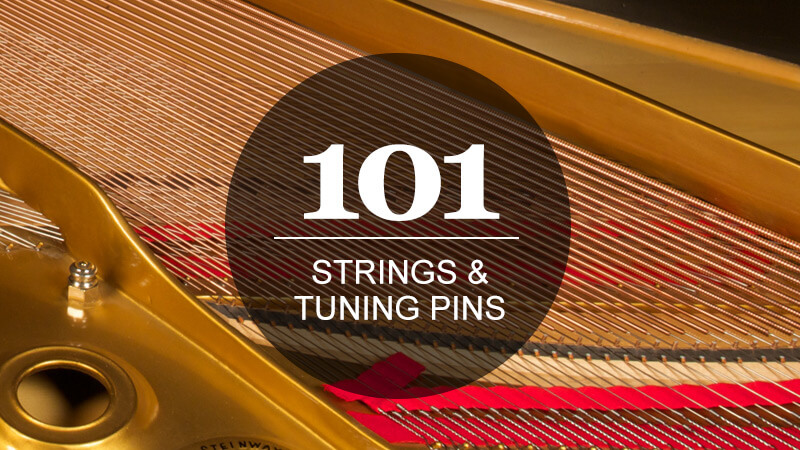
Strings are the source of sound. Their condition is important. First, look to see if any are missing. Then check for rust.
Strings that are slightly tarnished or a little rusty are okay. But a lot of rust, especially on the coils or at bearing spots will cause broken strings. On the other hand, too many new looking strings may suggest a problem with breaking strings too.
With pianos, beauty is not just in the eye of the beholder. It’s also in the sound. A piano that’s been neglected can be expected to go flat. But if it’s way out of tune, it may also be a sign of loose turning pins.Only a technician will be able to tell you this for sure. In the mean time:
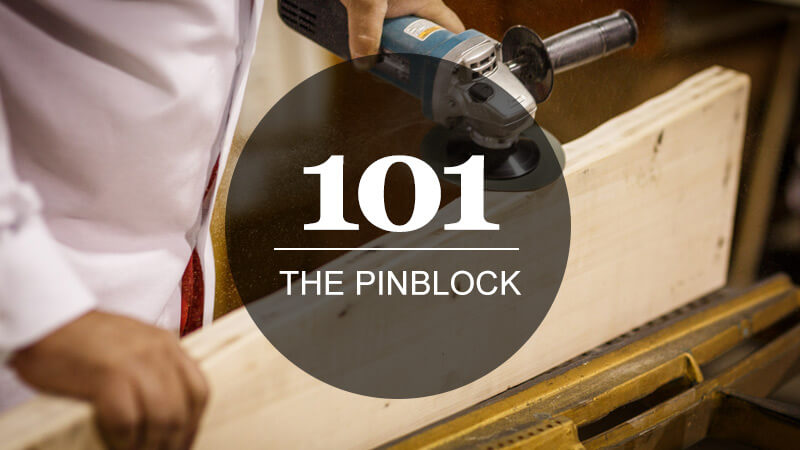
Do the tuning pins look uniform? Can you see if there are obvious replacements? If so, the pin block might be going bad.
The bass bridge is your biggest concern. It’s normal to have some hairline cracks around the bridge pins. But too many cracks will dislocate bridge pins and may represent the need for a new bridge or bridge cap.
Ideally, you want a solid structure that’s free of cracks. Cracks suggest that the piano’s structural integrity has been compromised. This will lead to multiple problems.
Even though you may be unsure of your visual checks, all is not lost. Although it’s no guarantee, a clear, resonant sounding piano is a good sign.
Play all the keys from end to end, listening for evenness of tone across the keyboard. Are the bass notes clear and resonant? Is there any buzzing or rattling?
Press down on a key that begins an octave above middle C. Hold it down and pluck one of the three strings of the note you’ve chosen. The sound should swell right after the pluck and soften as the string vibrates in a clearly audible tone for at least five seconds. If the sound stops in less than three seconds, the soundboard may impaired or the scale improperly designed.
The keys, hammers, action, damper and regulation get a lot of use. So it’s important to check them for wear and tear.
Pedals add special emphasis and lend emotion. They add life to your music.
To test the sostenuto: Press down on the right pedal to lift dampers, and then press down on the middle pedal. Keep it down while you release the right pedal. The dampers should remain raised.
Most people shopping for a piano only consider two options: buying either new or used. In reality, there’s an in between that is growing in popularity—buying a restored piano. A restored piano is most commonly a vintage, quality brand name piano like Steinway that is completely disassembled by hand and painstakingly rebuilt piece by piece. Old, worn parts are replaced with high quality new ones, but with careful attention to meeting original specifications. Then a lustrous, new finish is added to the cabinet. When done, the instrument looks and sounds just like when it was brand new. In fact, you’ll think it’s straight off the showroom floor!
A restored piano presents an opportunity for you to own the highest quality instrument at an extremely affordable price. In fact, you can own a restored Steinway piano—arguably the best in the world—for around half the cost of a new one. It’s an incredible value that is increasingly attracting buyers.
Some pianos are family heirlooms of great sentimental value, but age and neglect have dulled their appearance and impaired their usefulness as a musical instrument. Rather than simply tucking it away in a forgotten corner for the sake of family tradition, restoration returns them to their original glory. Their renewed beauty enhances the home décor and their restored sound provides musical enjoyment for generations to come.
Reputable vintage pianos often include unique features that are unavailable from modern manufacturers—like real ivory keys and solid wood. They also feature elegant cabinets with beautiful veneers and sometimes, intricate engravings that demonstrate old world attention to craftsmanship. Complete restoration returns its full original beauty and sound.
If you’re looking for functionality and mainly interested in the most practical instrument for your child’s piano lessons, then there are many new and used bargains available at competitive prices. But if your tastes and preferences are more refined, a beautifully restored piano may be the perfect solution. Here are some considerations to guide your decision.
Beyond function and practicality, you prefer an enduring quality of sound and performance. To you a piano represents more than just an instrument. It’s an elegant piece of furniture that demonstrates an exquisite sense of personal taste, enhances your home décor and by its very presence adds a “WOW” factor that impresses guests.
A restored vintage piano offers features not available even in today’s most expensive brands. And there are many unique styles that make both fine instruments and interesting conversation pieces. The superior quality of reputable vintage pianos offer you a selection of instruments that look beautiful, sound wonderful and include distinctive features that set them apart. As a result, they set you and your home apart.
The piano you want to buy is an investment you plan to keep. Rather than a few years of music lessons, you plan to instill an ongoing love for music and a respect for the piano as a traditional instrument of culture. You see the potential to use it for occasions beyond piano lessons as you invest for a lifetime of music appreciation.
When you realize you get what you pay for, demand quality and are willing to invest in it, a restored piano can offer you more for the money. A lesser brand is cheaper to purchase, but depreciates much like a car. A higher quality brand like Steinway will actually appreciate in value, but the price of a new one may far exceed your budget. That’s where a restored vintage piano offers superior value.
The purchase price is less than a new one and the potential for appreciation is even greater—making it a shrewd investment.
Take for example one of our former customers, Alan Fox. When he purchased a 1923 Steinway grand piano with an African mahogany wood cabinet that we helped him find, he was simply looking for a superlative instrument for his New Jersey home. But the instrument that cost him $15,000 in 1996 is worth twice that today. In comparison, had he purchased a new Steinway at retail price, today it would be worth only around $3,000 more.
Of course, avid musicians don’t flip pianos for profit. They’re interested in the pleasure of playing, the enjoyment of listening to and the satisfaction of owning the finest instrument available. But it’s still nice to know you made a prudent investment.
Piano restoration is not just a skill, it’s an art that is best accomplished by specialists. And the best in the business consider it more than a business. They have a genuine love and appreciation for music and are committed to creating the finest instrument possible.
Even though restoration is less expensive than buying new, it’s still a significant investment. So make sure you’re confident in those doing the work. Research the company. How many years of experience do they have? What are their qualifications? Ask for references and check them. Whoever restores your vintage piano should give it the loving attention it deserves.
If you’re considering piano restoration, chances are you either have a family heirloom of important sentimental worth or a high quality vintage brand name like Steinway, Mason Hamlin, Chickering, Sohmer, Baldwin, and other select brands that represents a great value opportunity. In either case, restoration is still a considerable investment. So how can you be sure you’re placing your piano in capable hands? How can you be sure that the finished product is what you expect—beautiful to behold and lovely to hear? Let’s start with an important reminder that rings with truth: You get what you pay for.
The Internet opens a door of ample opportunity. Every kind of piano imaginable is for sale. New and used dealers, individual owners and restoration companies from around the country are accessible online. And professional movers will deliver to your door. Great deals are everywhere and so are great scams. The first you want. The second... NOT.
Keep in mind that anyone with the cash or know-how can piece a nice website together. They can add astounding pictures, make impressive claims and insert convincing testimonies. We think we’ve done a rather fabulous job ourselves at www.lindebladpiano.com. But can you trust it? How do you know for sure if the pictures you see online are actually an expansive factory floor and not in reality a garage? If you live close enough, go check it out in person. If not, read on.
This is always your first course of action. Customer testimonials posted on a website should be real people. Don’t simply take their word for it. We live in the age of instant communication, right? People have cell phones, e-mail and text messaging. A reputable company will be ready and willing to provide that information to you. Never hesitate to ask for references and follow-up on them.
It’s okay to ask someone within the industry about another professional. Yes, we may be competitors. But we also care about the standing of our industry as a whole. We support one another’s reputation when it’s deserved. And in the end, we all want you to be satisfied with your final product. When someone unqualified masquerades in our industry, produces inferior quality and creates dissatisfied customers, it drags us all down. We don’t want that for you or us.
If a generic brand, re-manufactured water pump is installed on your car, you’ll save money over the price of a new one. But you’re taking a risk with an inferior product. And if the water pump goes bad a few months later, you’ll face additional labor costs to replace it. Doesn’t it make sense to pay more for a new water pump from a reputable manufacturer?
The same principle is true for pianos. A variety of manufacturers around the world produce piano parts that differ in quality and price. Why save a little money on products of questionable quality? If you expect the best sound and performance, insist on the best parts.
Ask the restoration company you’re considering for the names of the companies they buy from. When working on Steinways, we buy authentic Steinway parts from Steinway of New York. Helmut Abel of Germany is another one of our favorite, reputable manufacturers. Here are other companies we use:
The soundboard is made of wood and acts as your amplifier. Better quality wood produces better sound.
For Steinway pianos, we typically used Sikta Spruce soundboards obtained from Northwest Specialty Woods. (www.nswoods.net). Steinway NY uses the sitka spruce as well.
For other brands, we also buy Eastern White Spruce soundboards from Les Pianos Andre Bolduc Inc. (www.pianobolduc.com). The company is known throughout the world for superior workmanship. They offer stunning, unblemished matched board color, correct grain orientation and dimensioning and superior tone production.
We use Renner parts (www.rennerusa.com) for Steinway and Mason & Hamlin pianos. They develop action parts and tools specifically designed for American pianos. This includes original dimensioned piano action replacement parts for Baldwin, Chickering, Knabe, Mason & Hamlin, Steinway, and other fine American pianos.
The company also provides original replacement parts for the great European piano makers, including Bechstein, Blüthner, Bösendofer, Fazioli, August Förster, Grotrian Steinweg, Schimmel, Seiler, Wilh, Steinberg, Steingräber & Söhne, and the better quality Asian piano producers.
We buy our piano strings from Mapes Piano String Company in Tennessee. They’ve been in the business since 1912. Steinway of New York uses their strings too.
A final note about replacement parts: They should match the original parts in both quality and dimension. When a replacement part is a different size than the original it throws off the piano’s synchronization. This is critically important to the instrument’s overall sound and performance. This keeps the piano authentic to its original design.
Piano restoration is a labor-intensive job and involves more than just swapping out parts. Each part must be individually fitted and adjusted—much like piecing together a jigsaw puzzle. It’s where experience comes into play. And this experience is gained over time after working on many restoration projects. How many years has the company you’re considering been in business and how many years of experience do their technicians have? Do they specialize in piano restoration or just minor repair and tuning? There is a distinctive difference between the two.
Once all the parts are installed, the restorer must go through the entire piano again and adjust it for synchronization. In short, restoration involves a process that combines art and science. Gently taking many elements apart, painstakingly reassembling it piece by piece and then carefully adjusting and regulating it for the final product. In other words, it involves art and science. Technical skill as well as experience and know-how. The restoration company you want should have both.
Pianos can be expensive investments and often have much sentimental value to owners. So it’s understandable for you to be nervous when it’s moved. Perhaps that is why some owners insist on moving it themselves—they feel like no one will be as careful as they are. The truth is, you are much more likely to damage something—your piano, your home and yourself—by a do-it-yourself move. Professionals have the equipment, the knowledge and experience that will significantly increase the likelihood of a successful move. And don’t assume that all professional movers are equal because they’re not. Piano moving requires special equipment, knowledge and experience that many regular movers lack. Make sure the movers you hire have all three.
To begin with, pianos are heavy. The average spinet or console weighs from three hundred to five hundred pounds and full-size uprights between seven hundred to a thousand pounds. Grands vary from five hundred to a thousand pounds and a concert grand can be up to thirteen hundred pounds.
But it’s not just the weight. The irregular shape, delicate outer cabinet, inner components and uneven distribution of parts must also be figured in. Altogether they create problems of weight allocation and balance that must be managed on stairs, through small openings and around tight corners.
A grand piano is typically moved on its side, flat side down. First the pedal lyre is removed from the piano and internal moving parts are secured as needed. The left leg is removed (as you face it) and the piano is lowered slowly onto a special skid known as a piano board. From the curved (kidney) side of the instrument, it’s lifted and positioned to sit vertically on the board. The other two legs are removed and then it’s wrapped in blankets and strapped to the piano board. When moved this way, a grand is actually very thin and fits through doorways and other openings easily.
A vertical piano is much less complicated to move. It usually involves positioning one person on each end. Handles on the back side (the one pushed against the wall) provide a firm grasp. The other hand is placed under the keyboard and the piano is then lifted and placed on a dolly.
Professionals will avoid stairs if possible and use cranes or a block & tackle to pass through windows in upper story housing. Most will consent to stairs only when there is no other alternative. And then the owner must make sure the piano can actually fit. Otherwise you may have to pay for return delivery or to an alternate location.
Most companies charge by a 1,000 pound minimum weight requirement. The price typically includes a house to house move and $5,000 worth of insurance. You might want more insurance depending on the value of your piano. Start by asking local piano dealers for recommendations. Every mover should be able to provide:
Here are some basic guidelines when moving a piano yourself. The main concern for both grands and verticals are the legs. They are often caught and broken when crossing uneven floors, grates and thresholds. Dragging across carpet can also over stress and break them. For a grand piano, three to five strong people should gather around the circumference and lift while moving. You don’t have to lift it all the way off the floor. You just need to relieve the strain on its legs.
At least two people should be involved when moving a vertical piano. Keep the back of the piano on the inside when making turns. And if it’s a smaller, apartment sized vertical with free-standing legs, tilt it back slightly while moving to protect the legs. But be sure you have a firm grasp because most of the weight is in the back and you don’t want to lose control and let it fall over. Larger verticals and smaller ones without legs can usually be rolled, although this may be difficult over carpet.
Your piano may go out of tune a few weeks after it’s moved. This is very seldom related to the move itself, but more often caused by differences in humidity between the two locations.
Grand piano pedals may need to be adjusted after the piano is moved. This is because the shims used to take up slack in the trap work fall out when the lyre is removed. Also, the pedal rods that extend from the back of the pedals are sometimes mixed up in order.
Be sure the piano movers remember to put lyre braces back on your grand piano.
Because a grand is moved on its side, a key stop rail should be mounted on top of the keys behind the fallboard to stop the keys from falling off the key frame. If the rail is missing or not secure, the keys will be in disorder and unplayable after the move.
Feel free to contact us if you have any other particular questions about piano moving.
A piano will provide years of enriching, musical pleasure and can even become an endearing family heirloom that is passed on to the next generation. But like anything else of value, the care it receives will impact its longevity and quality of performance. Here are some basic guidelines to help you along the way.
Humidity is the main culprit that affects the performance of your piano. A piano is constructed of thousands of wooden parts that must all be harmoniously synchronized. And fluctuations in humidity throws them all out of whack. Because in summer when humidity rises, the wood expands and in winter when humidity lowers, it contracts. This results in a constant pushing and pulling on parts that requires constant evaluation and adjustment. But there are some ways to minimize this affect.
Position your piano in a spot that creates the most stable conditions and avoids fluctuations in humidity. Situate it along an inside wall of your home if possible or at least create a 6” minimum space between it and an outside wall.
Never place it against or near a radiator or heating/air-conditioning vents. Protect it from constant direct sunlight with curtains and/or blinds and avoid keeping it in unusually damp places like basements.
Most pianos are designed for an average climate and a 40%—50% level of relative humidity as a general rule of thumb. You can regulate humidity with some degree of success in your home.
A humidifying system attached to your central heating/air-conditioning system will not only benefit your piano, but the health of your family. If this is cost- prohibitive, another alternative is a portable system that can be used in one or several rooms. And finally, a miniature climate control system can be installed in the piano itself. The Dampp-Chaser climate control system features both a humidifier and de-humidifier. It monitors and regulates humidity to maintain the ideal 40%—50% level year around.
You’ve probably seen a guitar tuned. The guitarist turns a peg to tighten/loosen the tension of a string that is wound around it. This in turn, changes the pitch. Each string follows the same procedure and is individually tuned to a certain pitch. A piano is basically tuned the same way except it has over 200 strings and requires a special tool to turn the tuning pin then set in the appropriate position and angle to ensure that the piano holds the adjustment. Piano tuning requires the skills of a professional technician. Contact piano dealers or music schools in your area for names of reputable professionals.
How often should you have your piano tuned? The most common practice is once or twice a year although if you’re a professional musician, four times is the ideal. Since changing humidity is what affects your piano’s tuning the most, the best time to tune it is after the change in humidity has occurred—usually in the fall and in the spring.
Dust has a way of accumulating both on the outside and the inside of your piano. As it settles on the strings, the soundboard, and other internal components, it affects both the sound and performance of the instrument. Regular cleaning ensures that it looks and sounds its best.
The first important rule to remember when cleaning a piano is regardless of what cleaning solution you use, never spray it directly on the piano. Instead, spray it on the cloth you’re using to wipe with.
Piano cabinets go through an elaborate finishing process to achieve the shine that makes them so attractive. And some furniture polishes contain alcohol that can damage it. So don’t settle for any old furniture polish. We recommend using OZ furniture polish that can be purchased at most hardware stores or Plush furniture polish that we carry in stock. Plush may be used on all shades of furniture. In addition, it...
If you would like a free bottle of Plush furniture polish, send an email to: contact@lindebladpiano.com with your name and address and we’ll mail you a bottle.
If you’d like to create your own solution, mix 2 tablespoons of vinegar with one gallon of warm water. Or create a mild solution of a liquid ammonia detergent diluted with water. Use a soft, clean cloth that is free of lint and remember to rub with the direction of the wood grain.
When cleaning the white keys remember to dampen the cloth slightly and NEVER spray directly on the keys. Avoid using so much cleaner that liquid seeps down in between the keys. After you wipe the keys with solution, wipe them again with a dry cloth. Clean the black keys separately with a cloth.
The trapwork inside a vertical piano collects dust, small household items and sometimes even nesting rodents. The lower frame board usually just sits on some dowel pins and is retained with a simple clamp. So it’s easy to remove for interior access.
Then you have options. You can use a vacuum cleaner to remove dust. This will be neater but less effective for thorough cleaning. Especially if you want to reach other internal areas too.
A second option is to attach the other end of the vacuum cleaner to blow the dust. Even better, use an air compressor for more wind power. It will be more effective, but also messier. To reduce the mess, blow towards one end of the piano and rig a damp sheet on that end to create a barrier. Or if it’s a clear windy day and you’re really ambitious, move the piano outside and then you can have a real blow out!
The strings and soundboard of a Grand will naturally accumulate more dust than a vertical because of the horizontal position. And because the lid is often left open on a Grand. However, it also makes it more accessible for do-it-yourself cleaning.
You can clean the strings by rubbing them lightly with a fine grade of steel wool. Of course, as you do, shavings fall onto the sound board. Use either a vacuum cleaner or air compressor to blow the debris to one end where you can remove them. Or use a cloth and steel rod (you get from a dealer) to slowly work across the soundboard underneath the strings from one end to the other.
A thorough hand cleaning of the action and other internal parts should also be done periodically, but this is best left to the professionals. When your piano is scheduled to be tuned, ask the tuner to clean underneath the strings. If you still want to do it yourself, there are step by step illustrated books that will guide you.
As you prepare to sell your piano, put yourself in the shoes of prospective buyers. They will have the same thoughts and concerns you had when you were buying. Make sure your piano is in the best possible condition and that you are ready to answer questions and provide information. This will significantly improve your chance of closing a deal.
Keep in mind, the market is huge and therefore, so is the competition. Your sentimental value for the piano creates a natural tendency for you to consider it worth more than what a buyer will. You may have to let some of those feelings go in order to make the sale.
If you’ve ever sold a car direct to consumers, you know there are common questions asked and certain practices that make things go smoother. First is the condition of the vehicle. Obviously, you’re going to clean it inside and out. And you’ll make sure it’s in the best mechanical shape as possible. Perhaps a tune-up, new brakes and new tires. This usually means taking it to professional auto technicians for needed repairs and to give it a clean bill of health.
Do the same with your piano. Let a piano technician tune it and make other repairs and adjustments before you put it on the market. And present his/her written evaluation to potential buyers. This establishes an important sense of trust along with objective criteria to help in negotiations.
Be ready to provide the following information:
The serial number will actually provide the year it was built, but save everyone the trouble of investigating. And if you have records on what’s been done to the instrument, keep them available.
Establishing the selling price for a used piano is a challenge and more art than science. Probably the closest thing to the automotive blue book is Larry Fine’s Piano Book and his Annual Supplement to the Piano Book. These helpful resources go into great detail and provide an exhaustive list of piano brands, models and sizes along with price ranges. They’ll give you an idea of where your instrument fits in the market.
Also, when the piano technician tunes and repairs your instrument, ask him for his thoughts on pricing. Then call area dealers and check online for prices of instruments similar to yours. The one thing to keep in mind: If you sell through the Internet, you will probably get less for your piano simply because you’re competing in a broader market. You can expect more when selling locally, but there are fewer potential buyers. Ultimately, a fair price comes down to what you and the buyer both feel is a fair deal.
The Internet is full of opportunities to buy and sell pianos. But again, expect to sell for less than what you might get locally because the competition gives buyers the advantage. There are several good sites for online selling. You may find others, but the ones we most commonly recommend include:
Take pictures of the inside and the outside of the piano to post online. And have all of the information discussed above ready for when people contact you. Several online dealers also offer brokering services and will sell your piano on commission. This may be an option for you to consider.
Selling over the Internet has several advantages, but there are disadvantages too. One is trust. What can you really tell by looking at a picture on the computer and can you really believe what someone tells you on the phone or in an e-mail? And if the product that arrives at your door is not what you expected, what then?
For these reasons, there will always be a local market. Some people won’t buy a piano unless they can see, hear and play it for themselves. They want to look you in the eye during the negotiation and live within a reasonable distance in case there’s a problem.
The classified section of your daily newspaper or and other local publications are good places to start for advertising. If you live near a major city, you can also try selling it their major newspaper. You can also post on bulletin boards at many stores and other public locations. Local piano dealers may also broker the instrument for you. You give up profit in the way of commission, but you save yourself the extra work and expense of doing it yourself.
Be sure there’s a clear understanding on who is responsible for moving the instrument after the sale. It might present a problem if you both assume the other is handling it. We recommend hiring professional movers. They carry insurance and have the right equipment and experience to ensure a safe delivery.
Feel free to contact us with any other questions. We’ll do our best to give you advice from our experience.
There are many resources available for every aspect of owning a piano. We’ve assembled a few of them by categories to assist you along the way. This is not meant to be an exhaustive list, but a helpful starting point. Most of the websites provide additional links to even more resources. If you have any other questions, please feel free to contact us.
This site provides information about piano lessons, tuners, dealers, teachers, movers, and more. It includes nearly 1000 pages of facts, figures, fun, forums, games, pictures, reviews and reference material. It’s a good place to start when you’re just getting started.
The Internet is full of opportunities to buy and sell pianos. Here are a few we recommend.
Piano Mart is owned and operated by a registered piano technician. It sells a variety of piano accessories with money back guarantees and offers a place to buy and sell pianos. It also features a free escrow service to protect both the buyer and seller in the transaction.
The Piano Book: Buying & Owning a New or Used Piano by Larry Fine As probably the most well-known and authoritative resource in the industry, Fine’s book covers nearly everything you need to know about buying, selling and caring for a piano. It includes in-depth information about various makes, models and brands along with differences in quality and price.
It can be purchased online at Amazon.com and Larry’s own site:
Annual Supplement to The Piano Book by Larry Fine This updated version gives current “list” prices for more than 4,000 new piano models and general advice on how to estimate actual “street prices.”
http://www.bluebookofpianos.com
Published for over forty-five years, the information they provide is used by libraries, retailers, factories, salespeople, music teachers and auction houses. And their new and used piano prices are used as a benchmark by technicians and appraisers.
Lindeblad Piano Restoration: http://www.lindebladpiano.com
A fully restored vintage piano is an economical alternative to buying a new piano and an investment that retains its value. Lindeblad Piano Restoration has restored popular brands like Steinway, Mason-Hamlin, Knabe, Chickering and others through four generations of a family business.
We have an inventory of completely restored vintage pianos you can browse through on our site that are ready for immediate delivery. And we have others in stock that we’ll customize for you.
Need your piano tuned or other repair work? Word of mouth recommendations are often the most reliable. So start by asking piano dealers, music stores and other music professionals in your area for their recommendations.
Another good source is the Piano Technicians Guild found online at:
Its mission is to promote the highest possible standards of piano service by providing members with opportunities for professional development, by recognizing technical competence through examinations and by advancing the interests of its members.
The site will provide you with a list of qualified technicians in your area through a simple zip code search.
The Resources page is designed for tuners, technicians, teachers and pianists. You’ll also find information on piano care and maintenance, piano history and piano competitions around the world.
Piano Servicing, Tuning and Rebuilding by Arthur A. Reblitz
If you’re a hands-on person, this illustrated how to book will lead you through the nuts and bolts of piano servicing, repair and even complete rebuilding. It’s written for the professional, the student and the hobbyist. You can buy it online.
The Piano Owner’s Home Companion by Steven R. Snyder
This book is written specifically for the layman. It covers basic care along with how to make some minor repairs using simple, easy to understand language along with helpful illustrations. You can buy it online.
Steve’s Piano Service:
This professional piano technician sells parts, tools and instruction manuals for piano repair and tuning. You’ll also find tips, advice, a little down home humor and links to other resources.
The ultimate value of a piano can be much greater than the financial (monetary) investment you make. The increased level of academics that piano lessons promote, the visual warmth and beauty an instrument adds to your décor and the cultural appreciation you gain through an association with music are hard to measure. And of course, don’t forget the simple pleasures of playing, listening to and singing along with your favorite tunes.
Although piano restoration and sales is our business, we are committed to offering helpful resources as our way of supporting the entire industry. In short, we love what we do. And we are passionate about selling only the finest quality instruments. But whether you ever purchase an instrument from us or not, we want you to feel good about your final selection and to enjoy it for years to come.
Be sure to also regularly visit our website—www.lindebladpiano.com—it’s constantly updated with fresh content and new links to helpful resources. And of course, you’ll find in our inventory an ongoing selection of beautifully restored vintage pianos at an excellent value and the highest guarantee in the industry. Feel free to contact us with any other thoughts or questions. Email us at contact@lindebladpiano.com or call us at 888-587-4266. We look forward to hearing from you.
Sincerely,
The Lindeblad Family
www.lindebladpiano.com